In the past week I finished our taxes and, technically, I made the most money per hour that I've ever made in my life. Amid the glee I felt over our expected refund were pangs of concern: can the government really afford to give me back this money? While I ponder this question, I won't hesitate to take it.
My bankrupt state also passed a budget last week - in record time (they have tended to straggle over the finish line in late-September), and today I saw city work crews out en force. Coincidence? No. I need to remember these men and women in a few months when I begin to kvetch about the state's cutbacks. At least someone is at work. Sadly, this may not include the lunch lady, librarian, or recess attendants at young S's school. Rumors have it that in order to met the "budget" in my bankrupt state, these positions along with school lunch programs and busing will be eliminated. And while shaking my head at the extreme short-sightedness of nearly eliminating funding for public education, I will remind myself of directions the state has not gone yet. We dodged a bullet by picking the California job over the Georgia one. Georgia's state assembly is debating how to suspend funding for faculty who do "unnecessary research." How does tenure work again when you have no paycheck?
My final scrape with government and work in this past week was as that of spectator to the particularly vicious sport of immigrant labor. My neighbor - International Academic - moved to the US in the OC last fall to begin a tenure-track position at Nearby College. Now that Dr. IA and famille are settled, Nearby College dropped the bombshell: "you need to get your green card right now so we can continue to employ you, it costs $7000, oh, and by the way, we canceled all your summer teaching because we have no money - our state is bankrupt." Dr. I.A. is fresh out of grad school, so the fees associated with buying a U.S. job are staggering. Dr. I.A.'s Mrs I.A. has waded into a similar morass. She got a special work permit that will allow her to take the job she was offered and work in the U.S. for one year. The only catch is that she can't leave the country during that time. The family and research of both Dr. I.A. and Mrs. Dr. I.A. are all located outside the U.S. The obstructions this country has established between non-citizens and "legal" domestic work are draconian. This is nativism enshrined in government.
Tuesday, February 24, 2009

Friday, February 13, 2009
[deep exhale]
I recently finished (and sent off) my third chapter. I am please, but not as pleased as I expected to be. It took me months longer than I scheduled to finish it and I'm still tired (though relieved).
Grossly missing my deadline isn't the only thing I didn't anticipate. I wrote a lot more than I expected, 54 pages before I trimmed it back to 43 (but before I added the spacing). More important, though, the story didn't turn out as I expected. It is still really top-down, which makes it oppressive and disheartening. Discussing citizenship for a minority (and subject people) requires top-down analysis, but one of the contributions I'm still claiming is bottom-up. So, this is my target when I get to revisions (provided Advisor agrees to such targets).
Ah, I can't wait for the revisions stage, when the whole thing is drafted. Completing this chapter gets me just over the half-way point. And I did have a lot to say. I'm also excited to get to the next chapter (oh, good stories there). So, I should be able to muster up some excitement to carry me through a couple of conference papers and into the drafting of chapter four. (Of course, I welcome all external means of excitement mustering!)
Grossly missing my deadline isn't the only thing I didn't anticipate. I wrote a lot more than I expected, 54 pages before I trimmed it back to 43 (but before I added the spacing). More important, though, the story didn't turn out as I expected. It is still really top-down, which makes it oppressive and disheartening. Discussing citizenship for a minority (and subject people) requires top-down analysis, but one of the contributions I'm still claiming is bottom-up. So, this is my target when I get to revisions (provided Advisor agrees to such targets).
Ah, I can't wait for the revisions stage, when the whole thing is drafted. Completing this chapter gets me just over the half-way point. And I did have a lot to say. I'm also excited to get to the next chapter (oh, good stories there). So, I should be able to muster up some excitement to carry me through a couple of conference papers and into the drafting of chapter four. (Of course, I welcome all external means of excitement mustering!)
Tuesday, February 10, 2009
depressing
Last week I did a bit of review in preparation for a class I joined on the New Deal. In light of recent events, I have to say, I was astounded by the similarities. I know, I know, every commentator that can get your ear has been making the same points, but they don't offer details like this. What really surprised me was in the details. Here's some of what I read (courtesy of one of my favorite historians, Eric Foner) with the addition of my commentary (just what you wanted, I know).
"The stock market crash [or credit crisis] did not, by itself, cause the Depression. Even before 1929 [September 2008], signs of economic trouble had become evident. Southern California [Nevada,] and Florida experienced frenzied real-estate speculation [check] and then spectacular busts, with banks failing, land remaining undeveloped and mortgages foreclosed [check, check, and check]. The highly unequal distribution of income [check] and the prolonged depression in farm regions [ok, no parallel here] reduced American purchasing power. Sales of new autos and household consumer goods stagnated after 1926 [October 2008]. ... A fall in the bloated stock market, driven even higher during the 1920s [early 2000s] by speculators, was inevitable. But it came with such severity that it destroyed many of the investment companies that had been created to buy and sell stock [AIG, Bear Sterns, Lehman Brothers, etc.], wiping out thousands of investors, and it greatly reduced business and consumer confidence. Around 26,000 businesses failed in 1930. Those that survived cut back on further investment and began laying off workers [over a half million just in first six months from September 2008 to February 2009]. The global financial system, which was based on the gold standard [or a market of pure credit], was ill-equipped [had no clue how] to deal with the downturn. ... Millions of families lost their life savings [retirement accounts]."
But wait, there's more: "Between 1929 and 1932, the price of a share of U.S. Steel fell from $262 to $22, and General Motors from $73 to $8. [or a "high" of $13 in September, 2008, to a low of $2.50 today] ... William C. Durant, one of the founders of General Motors, lost all his money and ended up running a bowling alley in Flint, Michigan. [fat chance now - tax-sheltered, off-shore accounts mitigate against such "adversity" for the obscenely wealthy] ... congressional investigations revealed massive irregularities committed by bankers and stockbrokers. [yes, and?]... Richard Whitney, the president of the New York Stock Exchange, was convicted of stealing funds from customers, including from a fund to aid widows and orphans. He ended up in jail. [we should be so lucky, instead they're relabeling their bonus system to make it seem like legitimate pay or maybe this is Madoff...]"*
In the class, we did not discuss such details, but there was significant discussion of the similarities and differences between then and now. Someone complained that we no longer "produce" things in this country, but, I would say, that the consumer economy is our economy and it can crack just like an industrial one can. One thing students noted was that no one has lost all of their savings (thanks, New Deal!) but that everyone's retirement was in jeopardy.** But having retirement savings to worry about is a something that the New Deal helped make standard.
And one last comparison that I have to make myself. After the class, I spent the week reading the Daily Worker which offered very clear criticisms of the markets, employment, wealth disparity, and global economy that created this crisis. Therein lies the biggest difference between now and then. No one is questioning the big picture just the details and these criticism of lending or extravagant spending is aimed at fixing the problems within the framework of a broken system. There doesn't seem to be any thinking beyond it.
*E. Foner, Give Me Liberty: An American History (Norton, 2005), 800-802.
**Maybe, I should note that these were "lifelong learning" students; they were all currently living on their retirement savings.
"The stock market crash [or credit crisis] did not, by itself, cause the Depression. Even before 1929 [September 2008], signs of economic trouble had become evident. Southern California [Nevada,] and Florida experienced frenzied real-estate speculation [check] and then spectacular busts, with banks failing, land remaining undeveloped and mortgages foreclosed [check, check, and check]. The highly unequal distribution of income [check] and the prolonged depression in farm regions [ok, no parallel here] reduced American purchasing power. Sales of new autos and household consumer goods stagnated after 1926 [October 2008]. ... A fall in the bloated stock market, driven even higher during the 1920s [early 2000s] by speculators, was inevitable. But it came with such severity that it destroyed many of the investment companies that had been created to buy and sell stock [AIG, Bear Sterns, Lehman Brothers, etc.], wiping out thousands of investors, and it greatly reduced business and consumer confidence. Around 26,000 businesses failed in 1930. Those that survived cut back on further investment and began laying off workers [over a half million just in first six months from September 2008 to February 2009]. The global financial system, which was based on the gold standard [or a market of pure credit], was ill-equipped [had no clue how] to deal with the downturn. ... Millions of families lost their life savings [retirement accounts]."
But wait, there's more: "Between 1929 and 1932, the price of a share of U.S. Steel fell from $262 to $22, and General Motors from $73 to $8. [or a "high" of $13 in September, 2008, to a low of $2.50 today] ... William C. Durant, one of the founders of General Motors, lost all his money and ended up running a bowling alley in Flint, Michigan. [fat chance now - tax-sheltered, off-shore accounts mitigate against such "adversity" for the obscenely wealthy] ... congressional investigations revealed massive irregularities committed by bankers and stockbrokers. [yes, and?]... Richard Whitney, the president of the New York Stock Exchange, was convicted of stealing funds from customers, including from a fund to aid widows and orphans. He ended up in jail. [we should be so lucky, instead they're relabeling their bonus system to make it seem like legitimate pay or maybe this is Madoff...]"*
In the class, we did not discuss such details, but there was significant discussion of the similarities and differences between then and now. Someone complained that we no longer "produce" things in this country, but, I would say, that the consumer economy is our economy and it can crack just like an industrial one can. One thing students noted was that no one has lost all of their savings (thanks, New Deal!) but that everyone's retirement was in jeopardy.** But having retirement savings to worry about is a something that the New Deal helped make standard.
And one last comparison that I have to make myself. After the class, I spent the week reading the Daily Worker which offered very clear criticisms of the markets, employment, wealth disparity, and global economy that created this crisis. Therein lies the biggest difference between now and then. No one is questioning the big picture just the details and these criticism of lending or extravagant spending is aimed at fixing the problems within the framework of a broken system. There doesn't seem to be any thinking beyond it.
*E. Foner, Give Me Liberty: An American History (Norton, 2005), 800-802.
**Maybe, I should note that these were "lifelong learning" students; they were all currently living on their retirement savings.
Tuesday, January 20, 2009
new year
I'm finally ready to start the new year. I tried to hold off because my albatross of a chapter is still not (yet) written (and my self-imposed deadline was Jan 1), but I can't hold back any longer. The chapter will get done regardless of the date. This realization offers me a new beginning (in that, I can't write a dissertation by force of will; I have to do it patiently and consistently). I'm also not-really trying not to watch the inauguration and parade. Having a new president - and this one, in particular - is a great new beginning. (Did anyone else exhale when the chopper finally took GW away from the Capitol for the last time? We made it.)
And the new year - of the ox - begins on Monday. The ox is supposed to prosper through quiet (perhaps isolated?) and persistent hard work. So, I've decided that the year of the ox will be good for me. My year to wrap things up and move on. And it will lead up to great things during the up-coming year - my year - the Tiger. So, I'm ready now for the year to begin.
And the new year - of the ox - begins on Monday. The ox is supposed to prosper through quiet (perhaps isolated?) and persistent hard work. So, I've decided that the year of the ox will be good for me. My year to wrap things up and move on. And it will lead up to great things during the up-coming year - my year - the Tiger. So, I'm ready now for the year to begin.
Tuesday, December 30, 2008
falling off the horse
The drive north and the delay caused by snow abetted my fall from my horse: I stopped writing and have neglected my chapter for an entire week. The fall had been surprisingly easy and I've only half-heartedly tried to climb back up. I'm still a bit soar as a result of my fall - in the shoulders - but this is more a result of rediscovering my skills with a snow shovel. All in all, we've had a great time here with siblings, parents, and dogs. (S, in particular, loves the dogs as well as the snow.) We were all awakened at 6:20 on Christmas morn by the youngest family member. We've since been enjoying hot drinks, holiday treats, and new books by the fire. And I have to admit that snow is good for creating a reason to cuddle down by the fire. I hope you all have enjoyed - and continue to enjoy - a great holiday!


Saturday, December 20, 2008
into the cold of winter
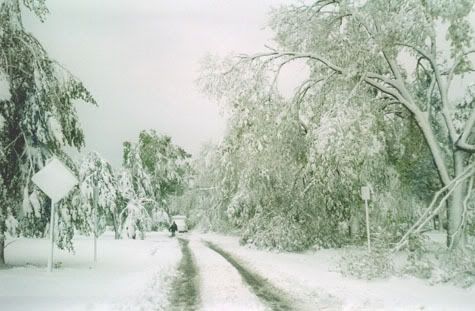
We're all packed up and ready to head to the wintry North. Recent weather conditions have not been in our favor, but the I-15 has reopened and made our journey possible. We head from the flooded desert to the high and frigid desert to the snow-dusted foothills, around the icy lake and into the dense and snowy mountains. We've got snacks, blankets, and chains. Now all we need is your best wishes for a quick and uneventful trip!
Trip reporter: Orange County; elevation: 50 feet; daytime high: 60; miles traveled: 0.
UPDATE (12/20): Cedar City (land of the Utes); elevation: 5000 feet; daytime high: 35; miles traveled: 424.
UPDATE (12/21): Pocatello; elevation: 4500 feet; daytime high: 22; miles traveled: 836.
UPDATE (12/22): Butte, U.S.A.; elevation: 5549; daytime high: 9; miles traveled: 1090. Snowing steadily and with gusto. (This was supposed to be the day we finished driving.)

Trip reporter: Orange County; elevation: 50 feet; daytime high: 60; miles traveled: 0.
UPDATE (12/20): Cedar City (land of the Utes); elevation: 5000 feet; daytime high: 35; miles traveled: 424.
UPDATE (12/21): Pocatello; elevation: 4500 feet; daytime high: 22; miles traveled: 836.
UPDATE (12/22): Butte, U.S.A.; elevation: 5549; daytime high: 9; miles traveled: 1090. Snowing steadily and with gusto. (This was supposed to be the day we finished driving.)
Wednesday, December 17, 2008
sources and technology
I made it through my paragraph crawl, but the road ahead doesn't look to be an easy one. The positive part of this struggle is that I have a lot to say; my problem has been figuring out how to put it in order. When I get stumped by this chapter, I daydream about how great it will be to move on to the next one (I had similar fantasies about how much easier the current chapter would be when I was writing the last one.) So, when I dream, I head on over the Congressional Record - on-line.

I think I've mentioned before how I love the hein database and I love it even more since I discovered that it contains an expanded version of the Congressional Record - the complete set! And I've been weighing the relative merits of the CR in its pdf, microfilm, and paper versions. The microfilm version is my least favorite. In fact, I hate it. A minimum of three reels per session. So, I have to scroll, scroll, scroll through one reel to find my pages; then, rewind, switch reels and scroll to each non sequential page where I try to decipher the poor copy on an ancient machine that no longer can zoom in and focus. Have I mentioned that microfilm makes me seasick? The on-line version wins for convenience, something that works well with my whimsy. But the paper version wins for ease of use. Flip to index, find term, select new volume and voilà - page, page, and page. And it is always easy to read and it takes me away from my computer which is good (we've become too close over the past year or so). I am overjoyed with the technological advances that have brought me the CR on-line, yet this version can't top the paper version. But since the paper version is hard to come by, my desktop window-to-the-world will continue to hook me up on-line!
In other recent developments - our desert here is flooding.

I think I've mentioned before how I love the hein database and I love it even more since I discovered that it contains an expanded version of the Congressional Record - the complete set! And I've been weighing the relative merits of the CR in its pdf, microfilm, and paper versions. The microfilm version is my least favorite. In fact, I hate it. A minimum of three reels per session. So, I have to scroll, scroll, scroll through one reel to find my pages; then, rewind, switch reels and scroll to each non sequential page where I try to decipher the poor copy on an ancient machine that no longer can zoom in and focus. Have I mentioned that microfilm makes me seasick? The on-line version wins for convenience, something that works well with my whimsy. But the paper version wins for ease of use. Flip to index, find term, select new volume and voilà - page, page, and page. And it is always easy to read and it takes me away from my computer which is good (we've become too close over the past year or so). I am overjoyed with the technological advances that have brought me the CR on-line, yet this version can't top the paper version. But since the paper version is hard to come by, my desktop window-to-the-world will continue to hook me up on-line!
In other recent developments - our desert here is flooding.
Subscribe to:
Posts (Atom)